Bespoke Design
The workshop
Hardwood boards made by hand from locally felled trees, one plank, one piece at a time.
About Bespoke Design
Boards for kitchens, not cabinets.
We make hardwood serving boards, chopping boards and resin river pieces that are meant to be used hard, heavy, hand-shaped, with grain worth looking at. Three things set them apart.
Handmade, one at a time
There's no production line. Each board is cut, shaped, sanded and oiled by hand at the bench, and the one-off pieces carry a handwritten tag with their number and wood. When one sells, that grain is gone for good.
Timber from local trees
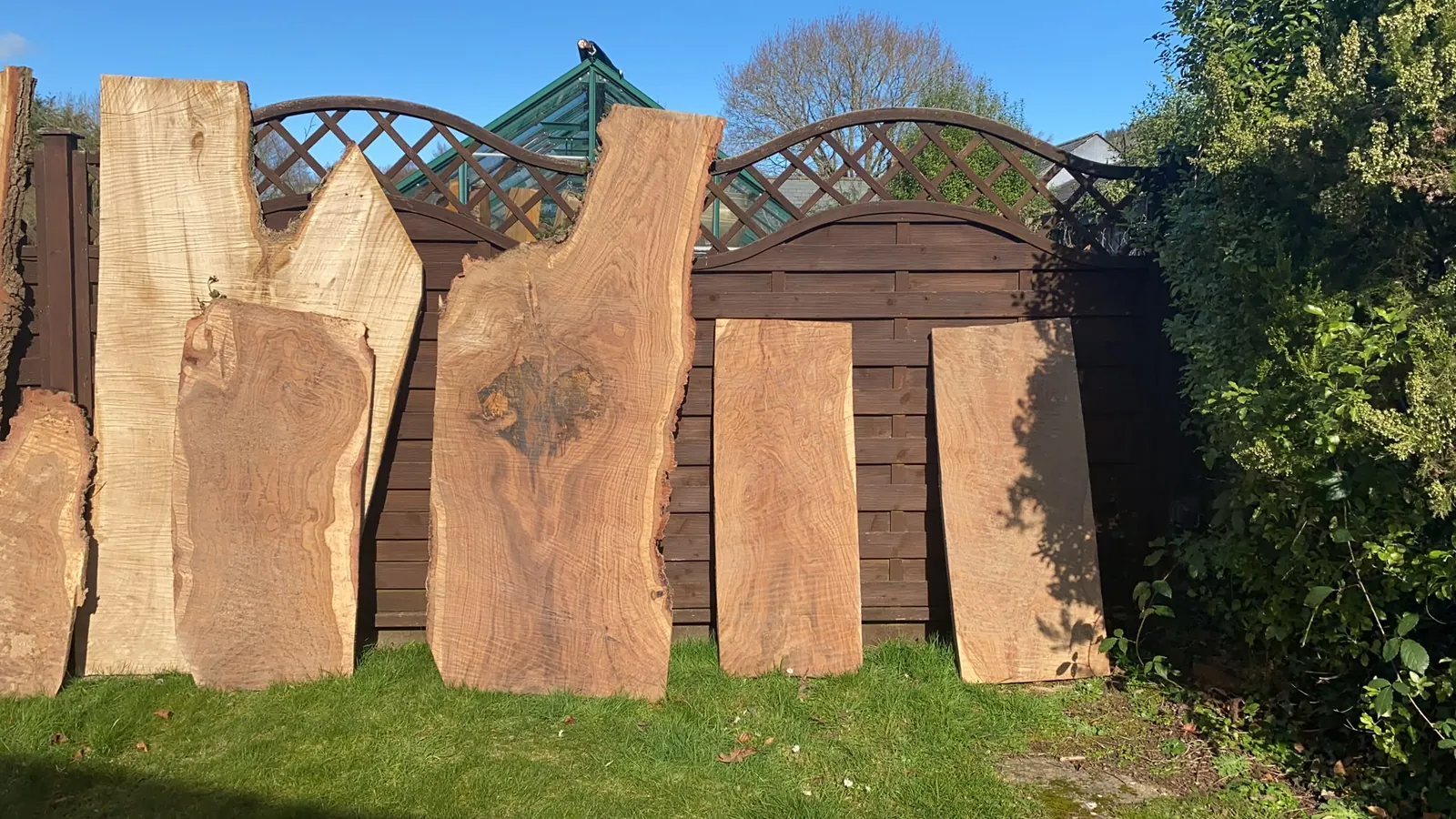
Most makers buy planks kiln-dried and squared off. Ours start as standing trees on farms and estates in Devon, just a few miles from the workshop, felled, milled and air-dried by us, so the figure and live edge in a board were chosen in the log, not found in a rack.
Resin, done properly
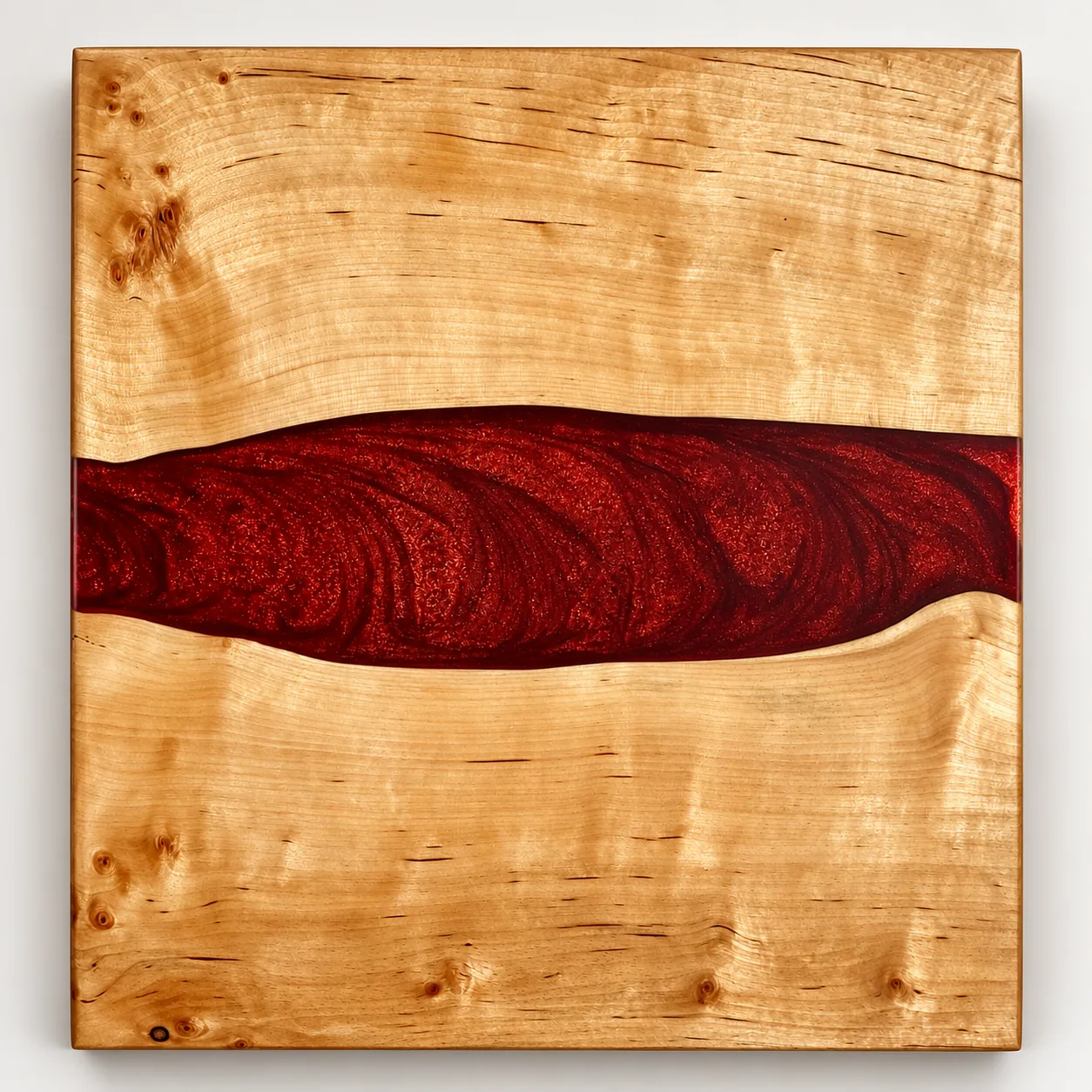
Not a thin, glossy coat that chips. Ours is poured deep into routed channels, cured for days and sanded back level with the wood, so the colour has depth and wears like the timber around it.
One tree, one plank, one board
Nothing is veneered or laminated. Every board is solid hardwood from a plank we milled ourselves, or two halves of that plank joined around a river. The one exception is American walnut, which we buy in.
Every board is made by the same pair of hands, from the first cut to the last coat of oil. Nothing is outsourced, and if you ask about your board, the person answering is the one who made it.
From tree to board
The timber journey
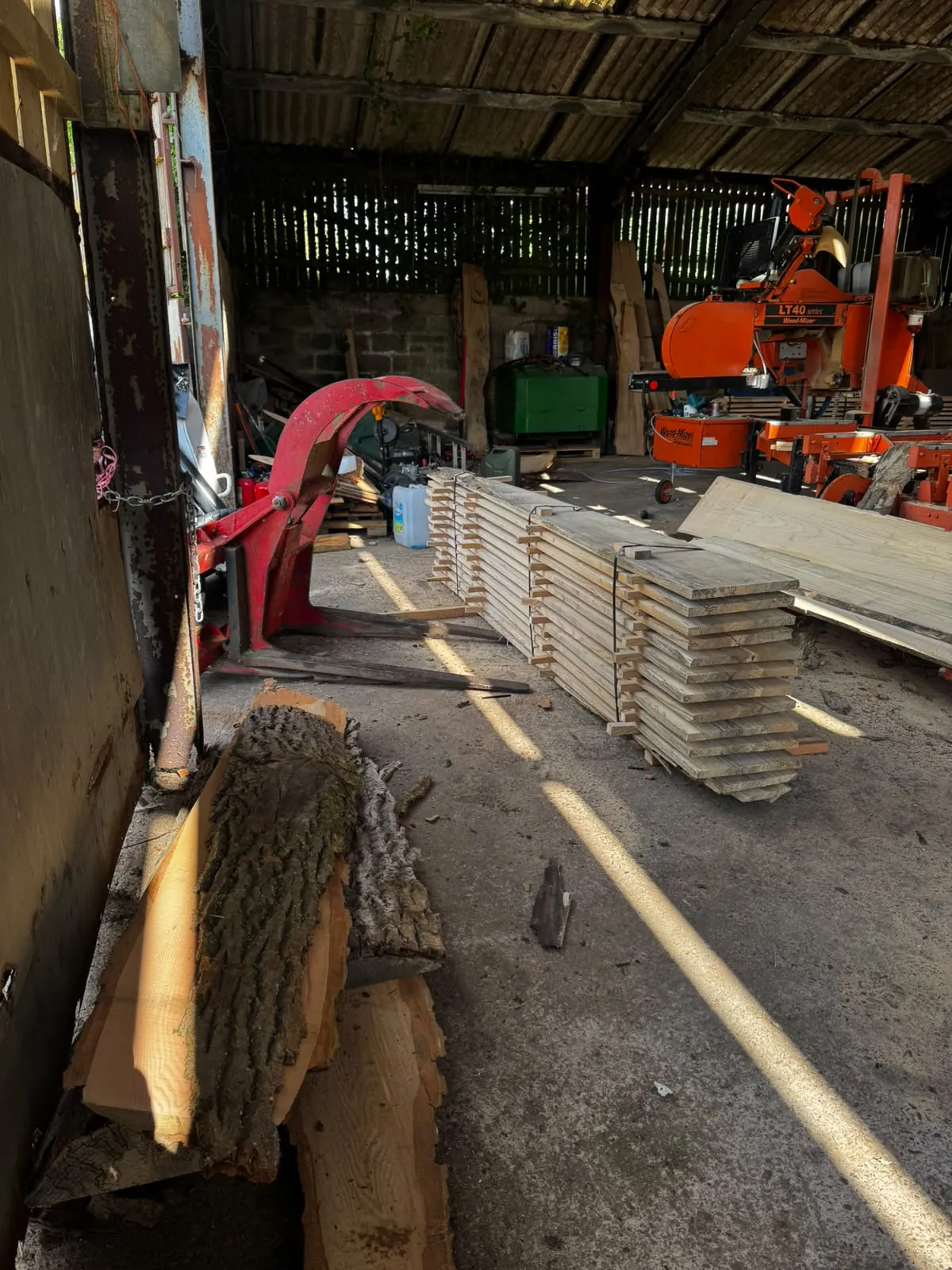
Most makers buy kiln-dried planks from a yard. Here, American walnut aside, the timber doesn't arrive ready to use. Peter is there from the standing tree to the finished board, sourcing it from Devon farms and estates, felling it, milling it, drying it and working it, so every piece carries a straight line back to the tree it came from.
 01Sourced
It starts with a local tree
Our timber starts as standing trees on farms and estates in Devon, a few miles from the workshop. The only wood we buy in is American walnut, which doesn't grow here.
- 02Felled
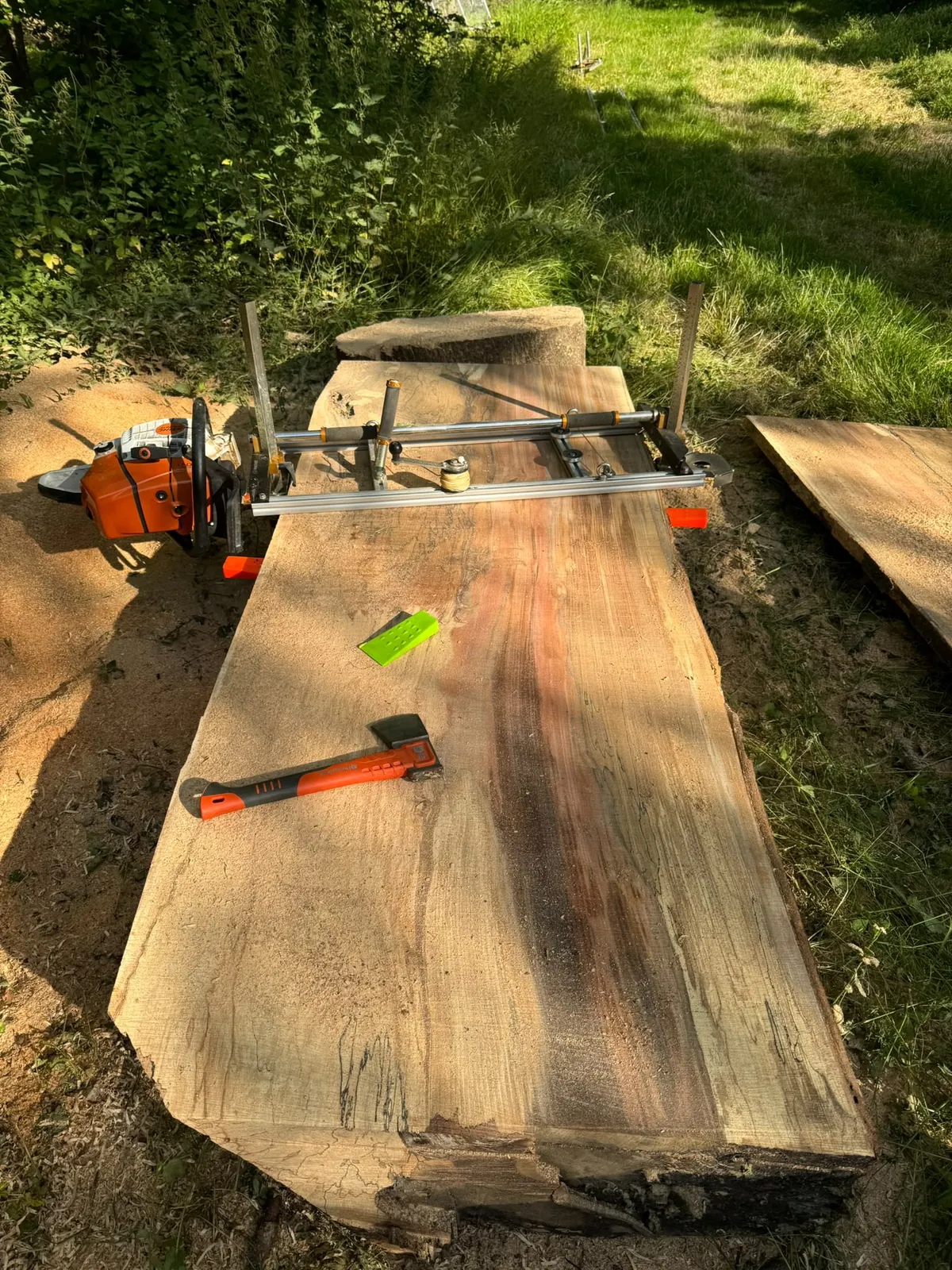
Peter cuts it down
Peter fells the tree himself. He sees the trunk whole before it's cut, so he already knows which lengths will make boards and where the best figure is hiding.
- 03Planked
Milled into planks
The trunk is sawn on site into thick planks, following the grain rather than fighting it. Live edges, burrs and spalting are kept: they're the reason a board ends up one of a kind.
 04Dried
Dried and prepared
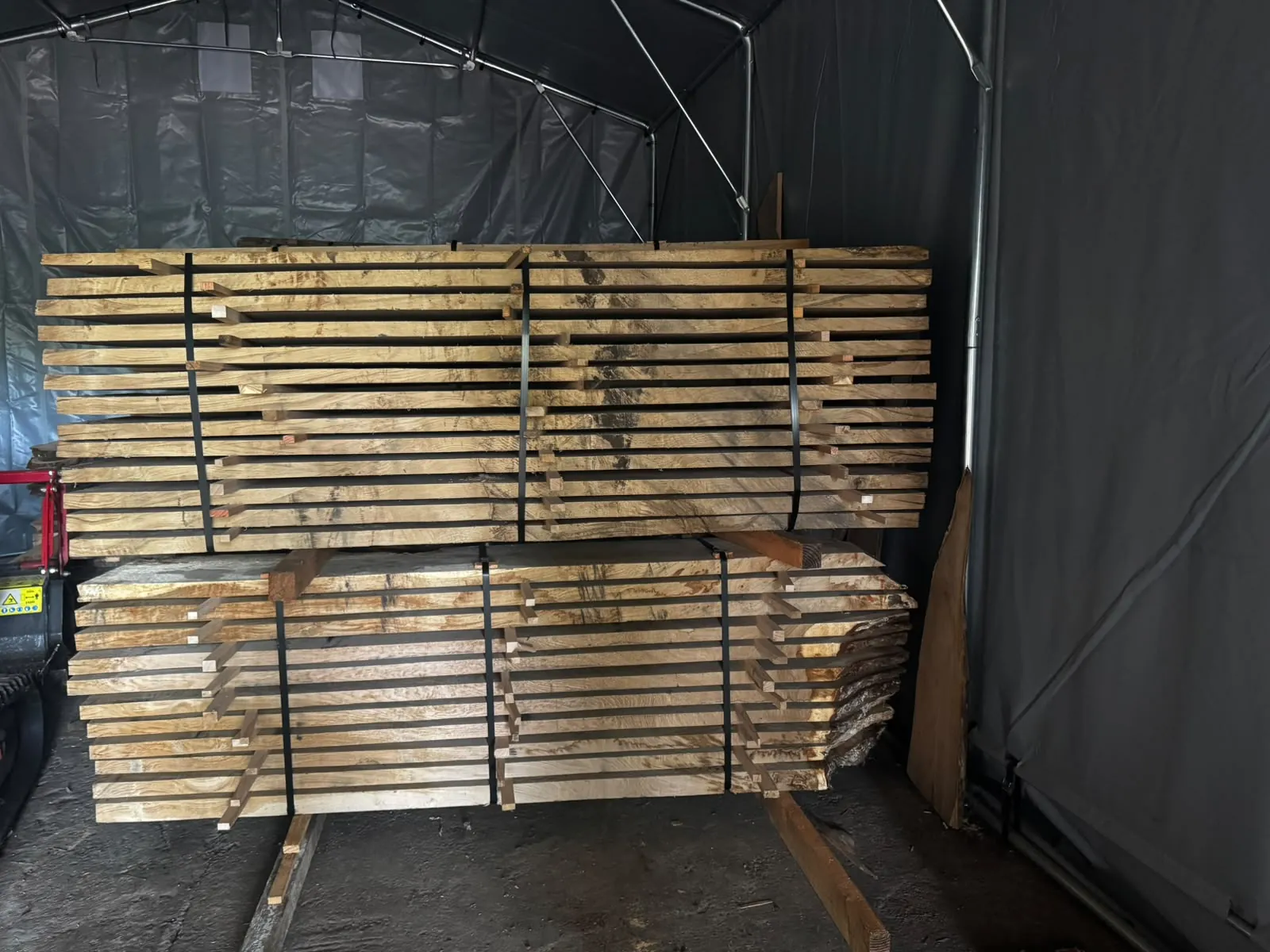
The planks are stacked in sticks and left to air-dry slowly, the better part of a year for every inch of thickness, before being brought indoors to settle before anything is made from them.
- 05Worked
Squared, planed and read
The log is milled square, then each plank is planed flat and looked at properly. Where the grain runs, where the spalting sits and where a river or lettering would fall all decide what the plank becomes.
- 06Handmade
Finished by hand
Cut, burned, routed, poured, sanded through the grits and oiled. All by Peter, at the bench. The same pair of hands that felled the tree signs the tag on the finished board.
In the workshop
From plank to finished piece
Once a plank is dry it's planed flat and read, where the grain runs, where the spalting sits, where a river or lettering would fall. Then it's worked by hand through the steps on the right.
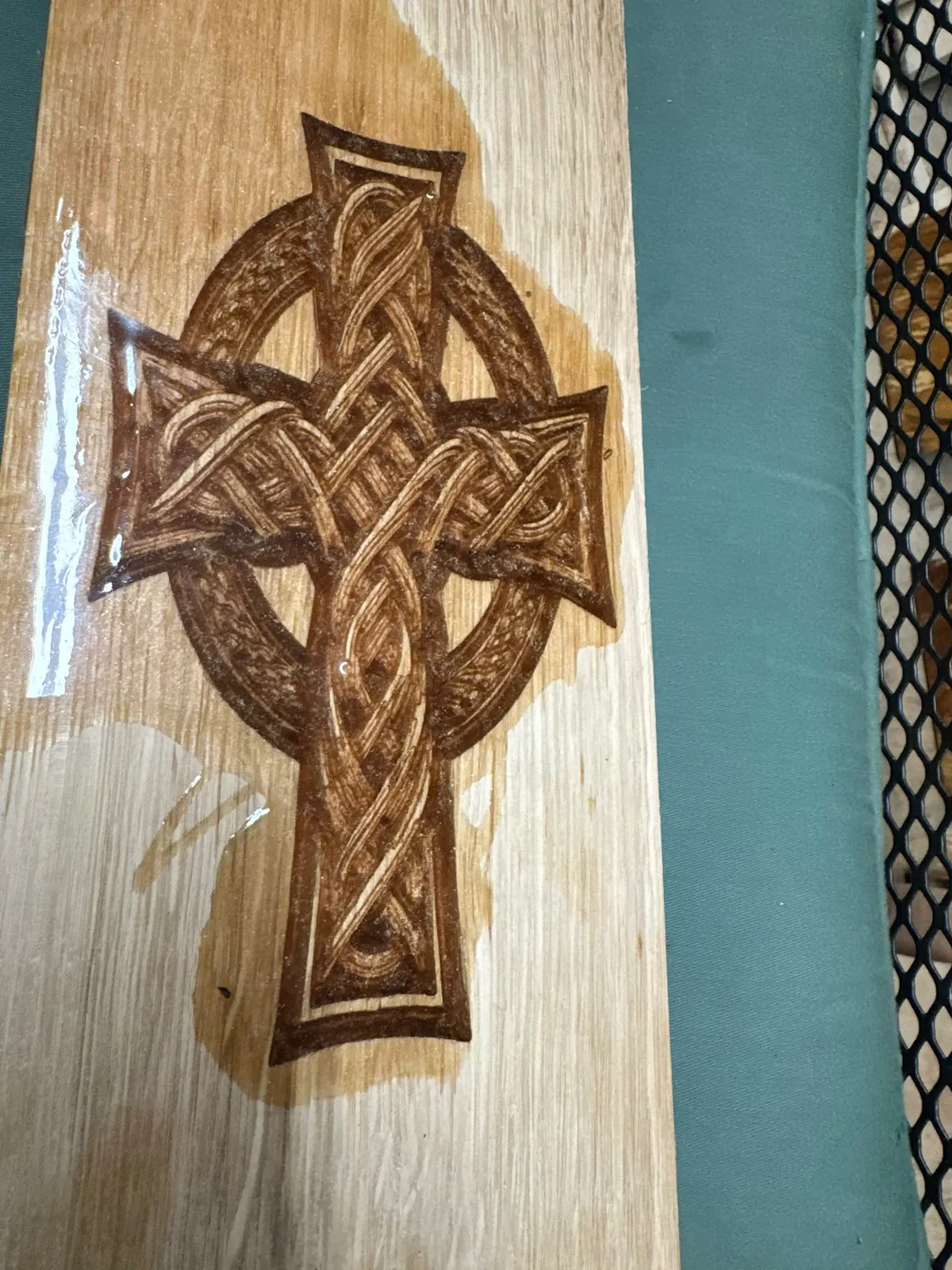
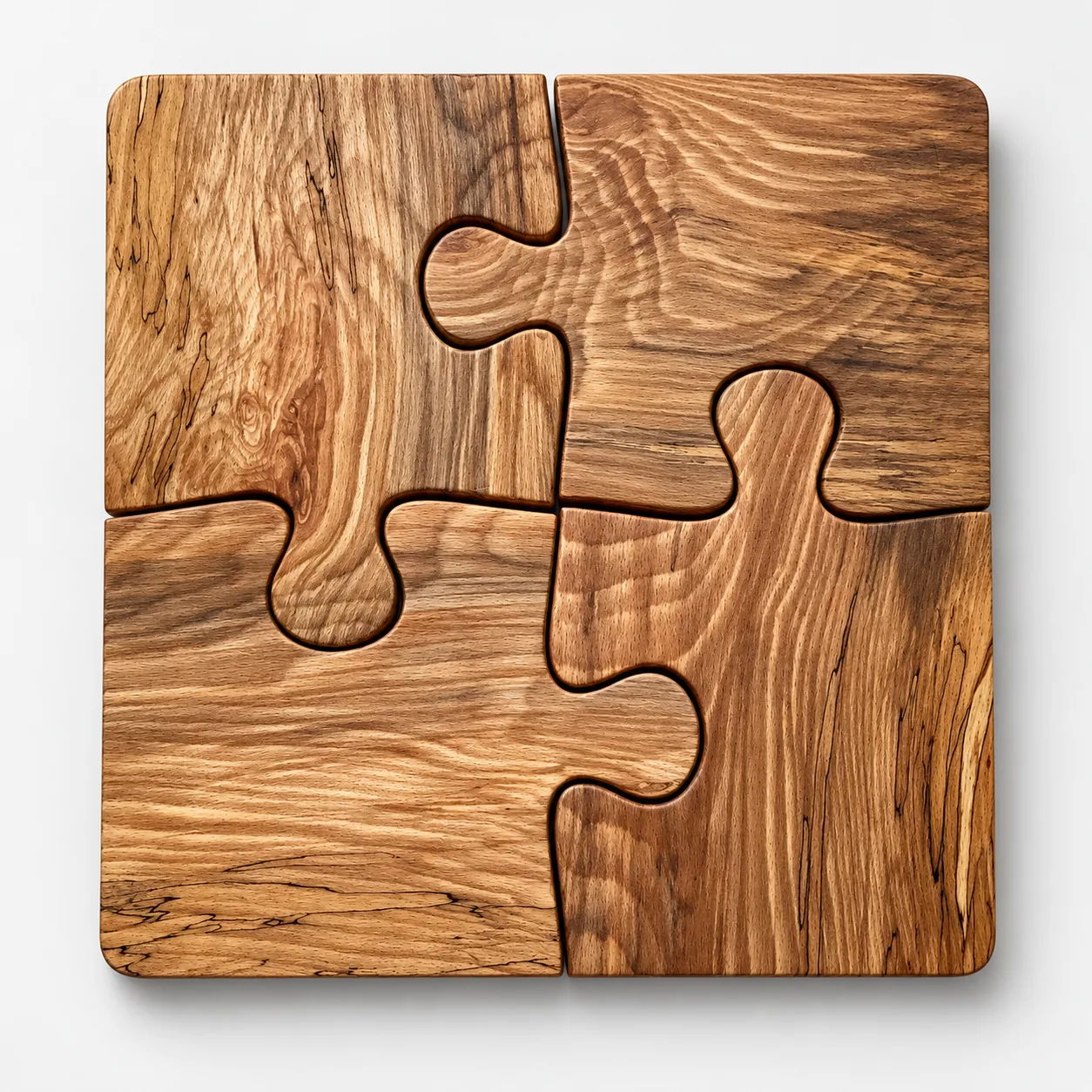
The outline is drawn straight onto the plank and cut by hand, paddle handles, live edges, hanging rings, jigsaw pieces.
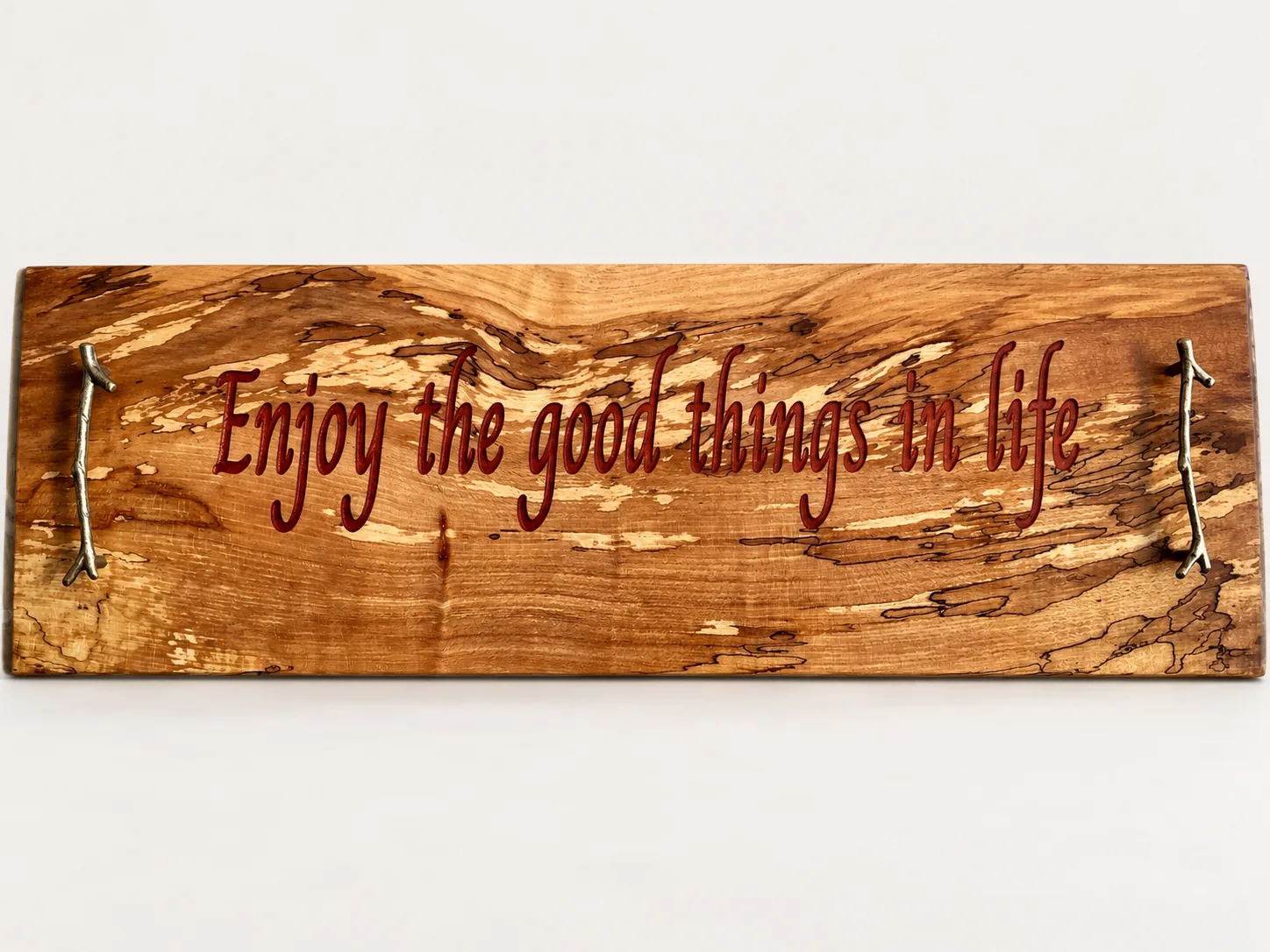
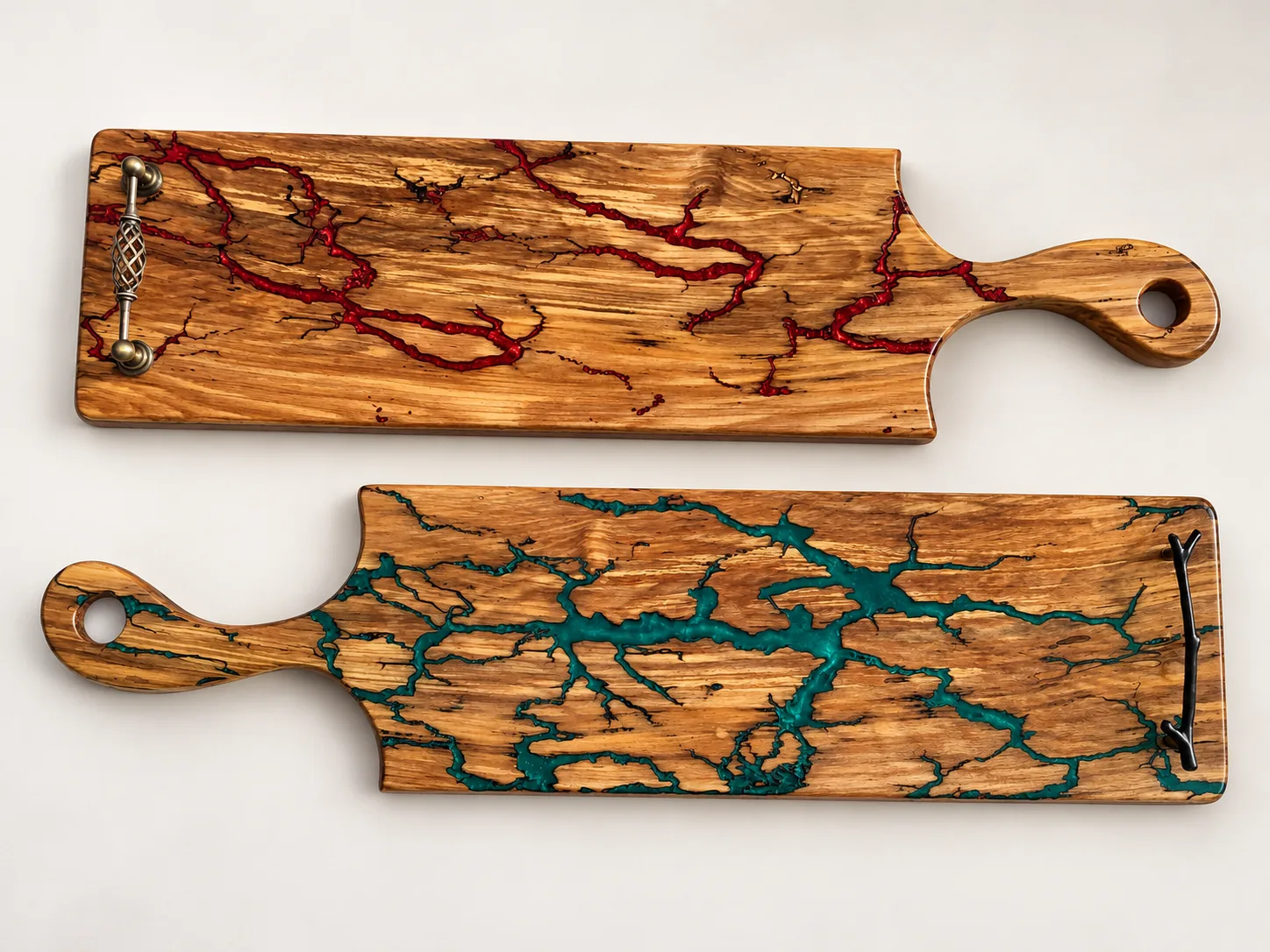
Lettering is routed several millimetres deep. Rivers are cut through and the halves re-joined around the channel.
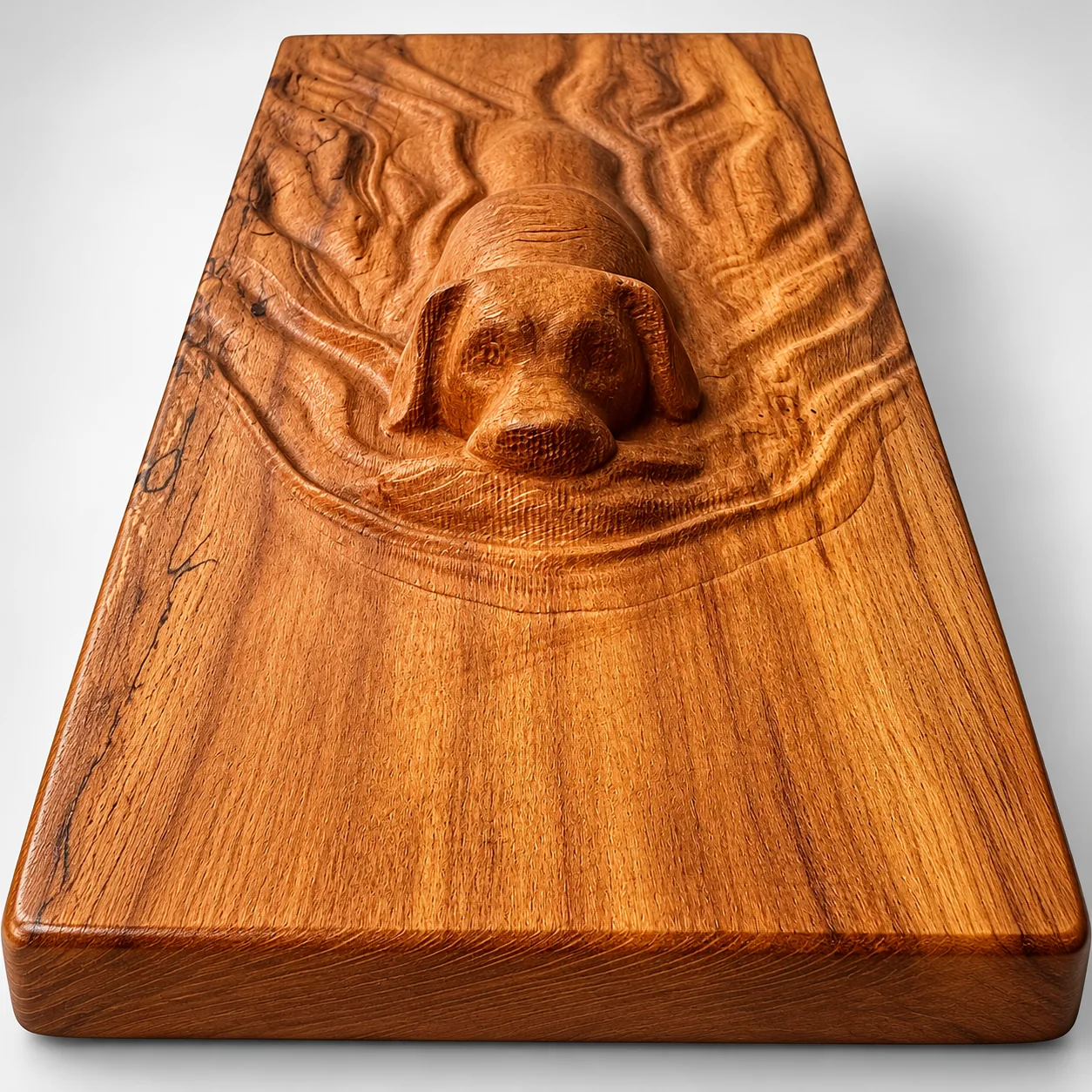
Relief pieces, the dog boards, the leaves and hearts, are carved on CNC machines, with designs and programs made by us, then finished by hand.
Resin is mixed to colour, poured slowly, and left to cure for days before anything touches it.
Through the grits, coarse to fine, until wood and resin are one level surface with nothing to catch a knife.
Two coats of food-safe hardwax oil, buffed back. Then handles, feet if wanted, a numbered tag, and a box.
Materials
The woods we work in
All hardwoods that take a knife and a lifetime of washing up. Which one a board becomes depends on the tree, not a catalogue.
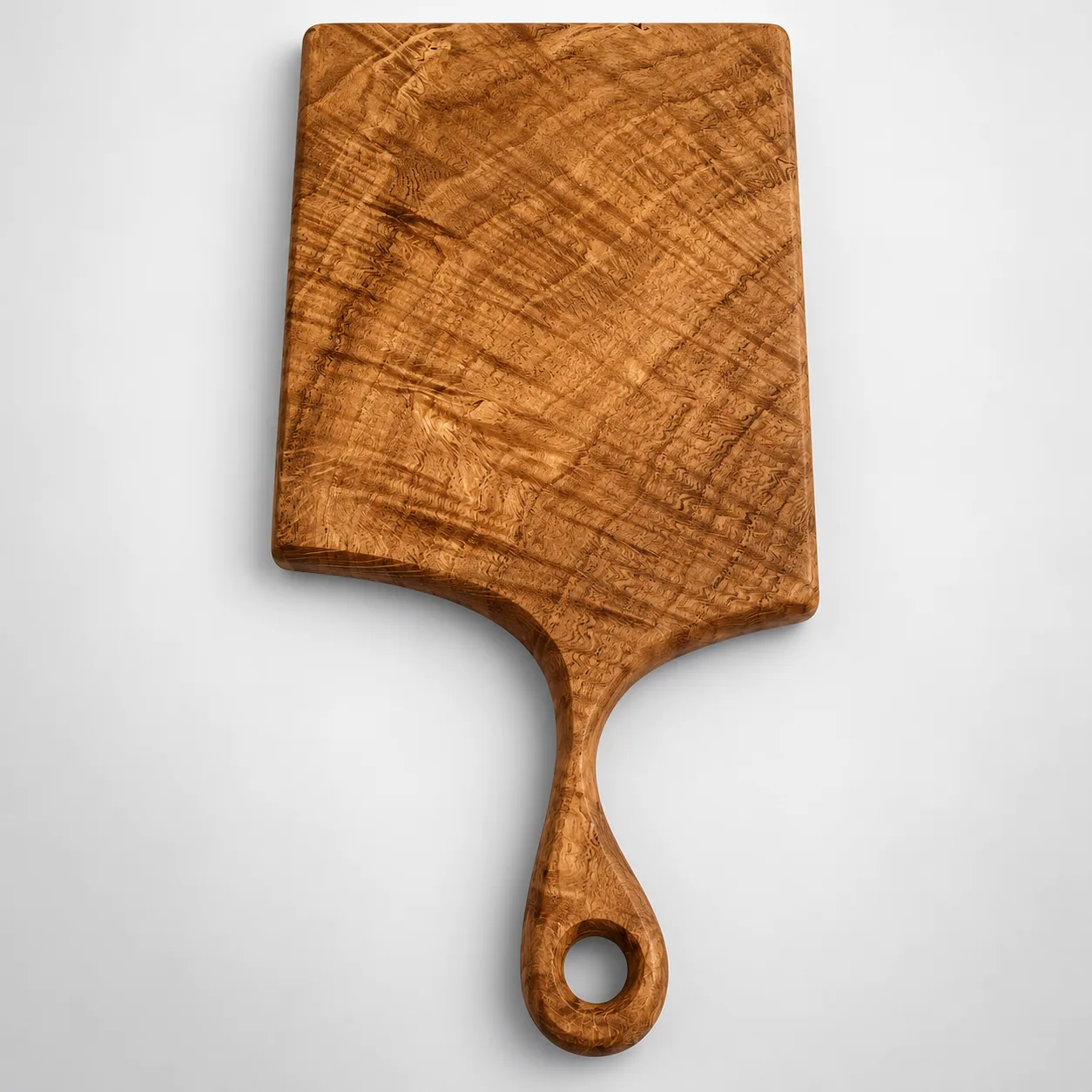
Oak
Straight, strong and pale, with silver ray flecks when quarter-sawn. Our everyday chopping board timber.
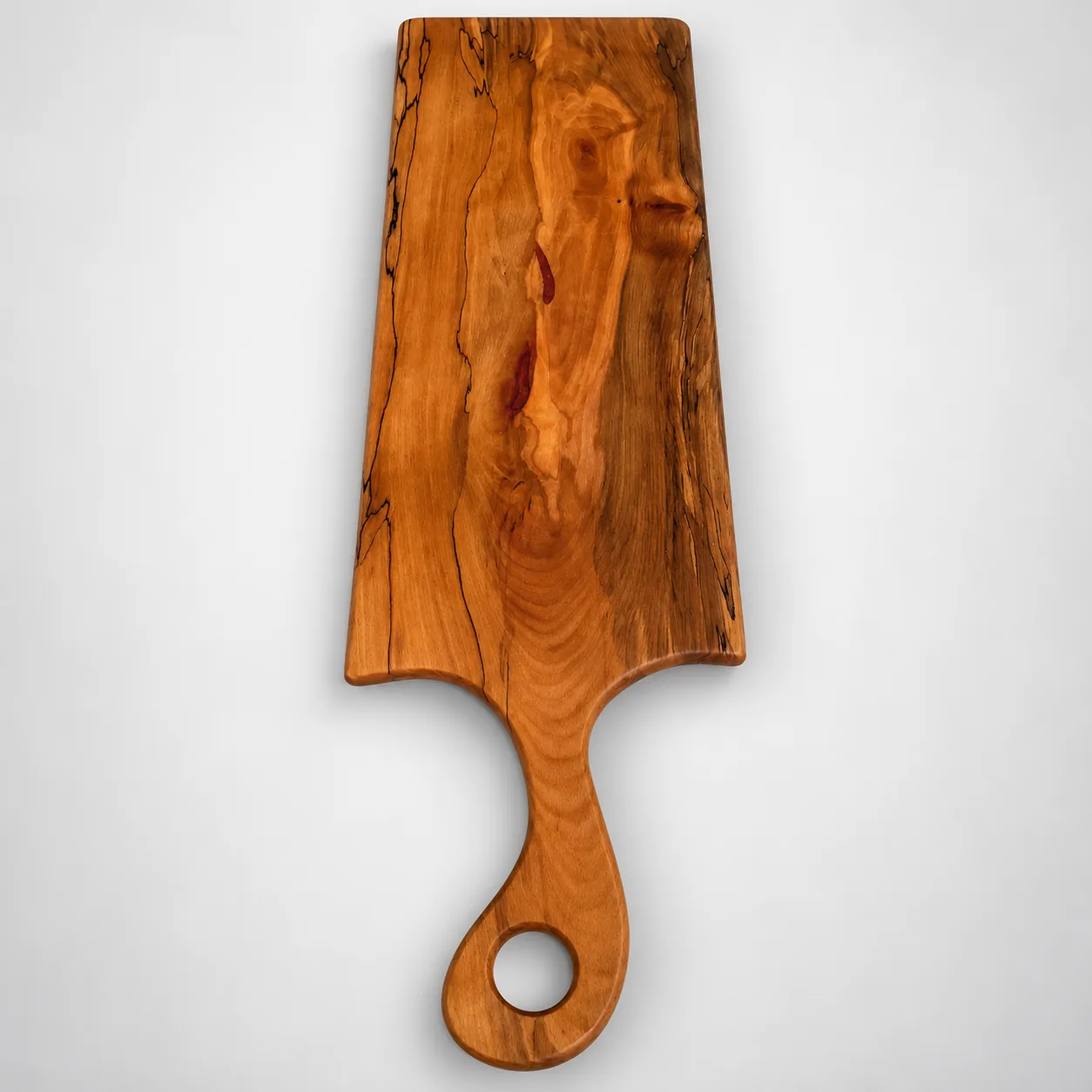
Spalted beech
Beech that began to season in the log, leaving fine black ink-lines through the grain. No two planks match.
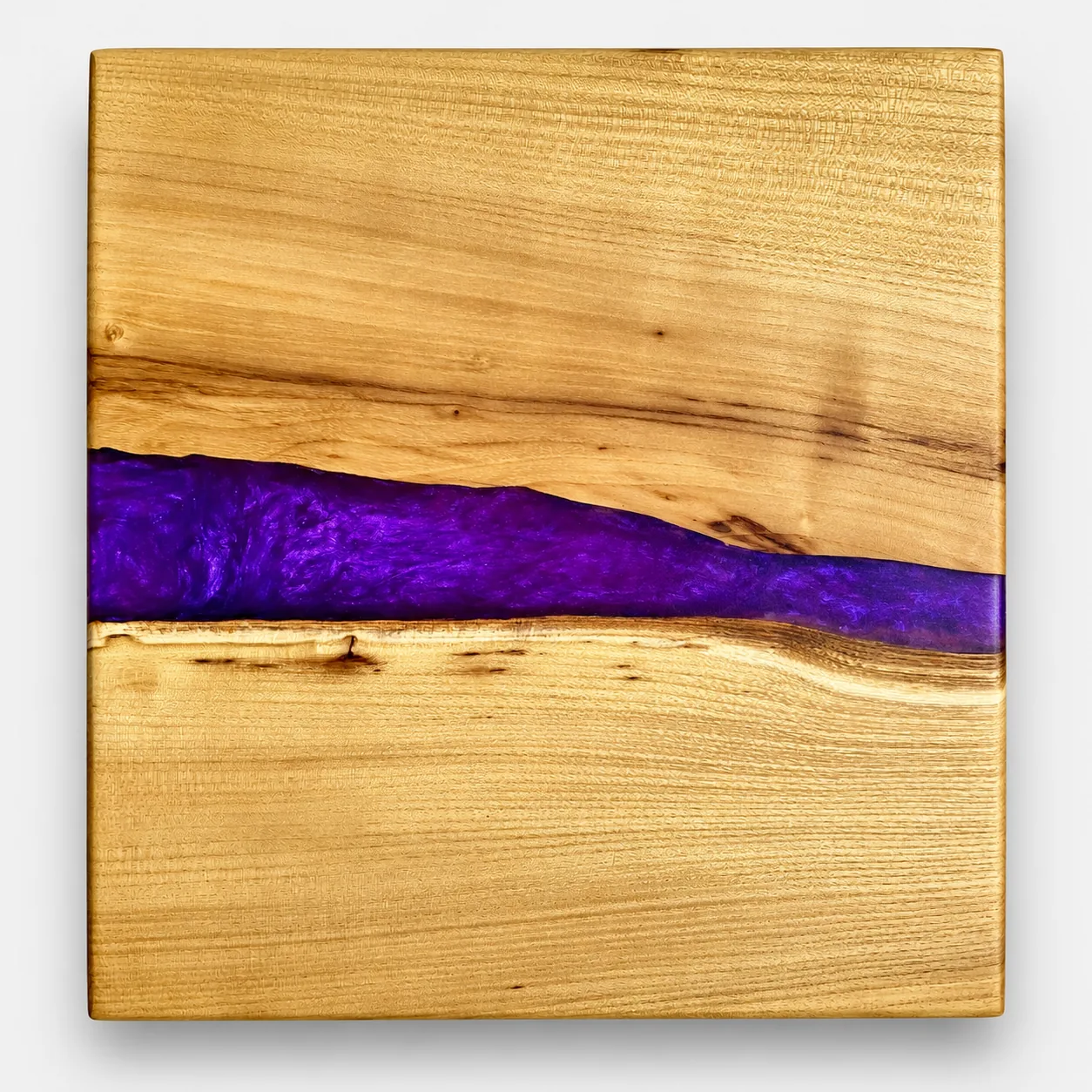
Ash & sycamore
Pale and even, the woods we reach for when a bright river colour needs a clean background.
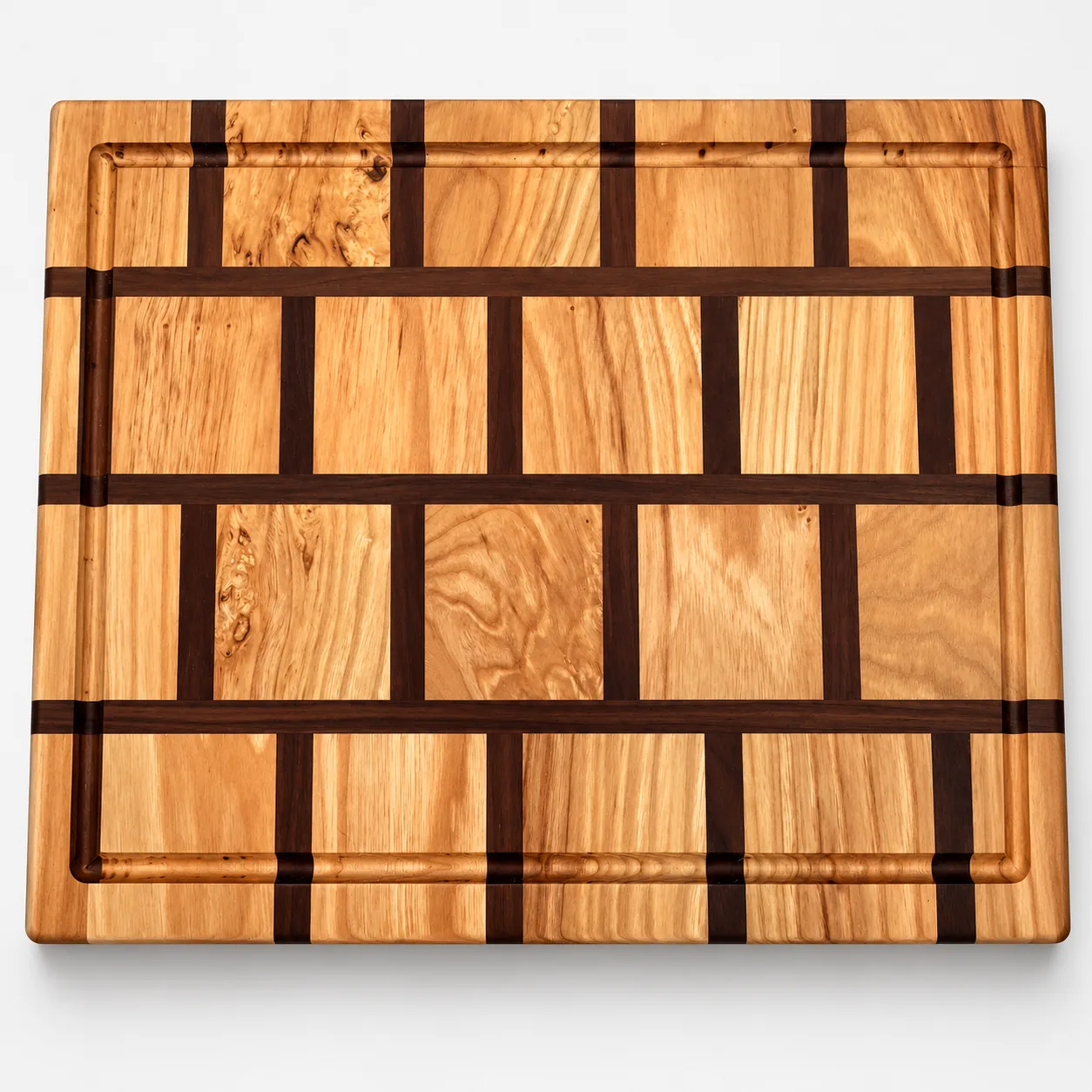
American walnut
Deep chocolate brown, used against ash in the bread boards. The one timber we buy in, because it doesn't grow here. Everything else we fell ourselves.
And everything else in a piece
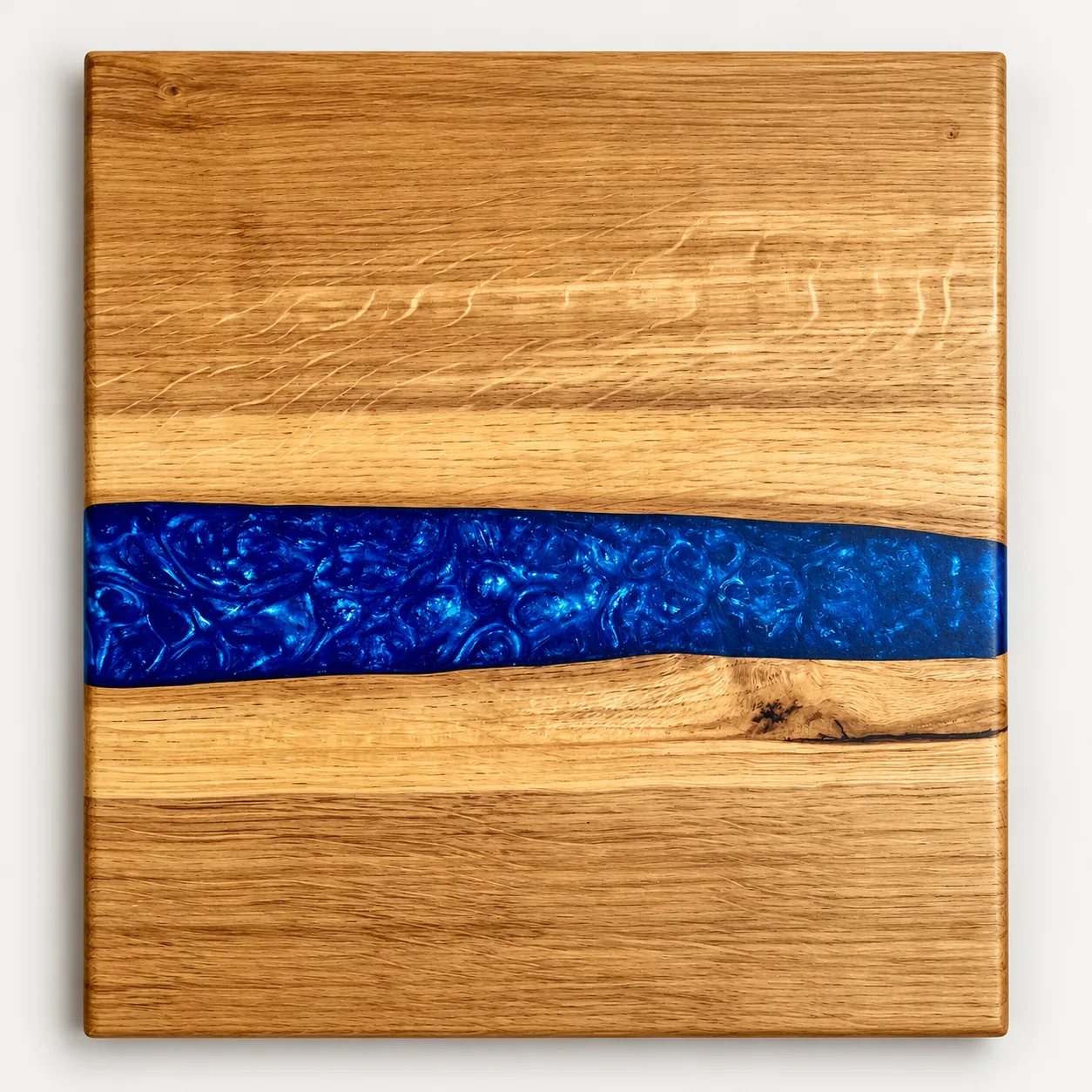
Pearlescent resin
Mixed to colour in the workshop, poured deep into routed channels and cured for days before it's sanded back flush with the wood.
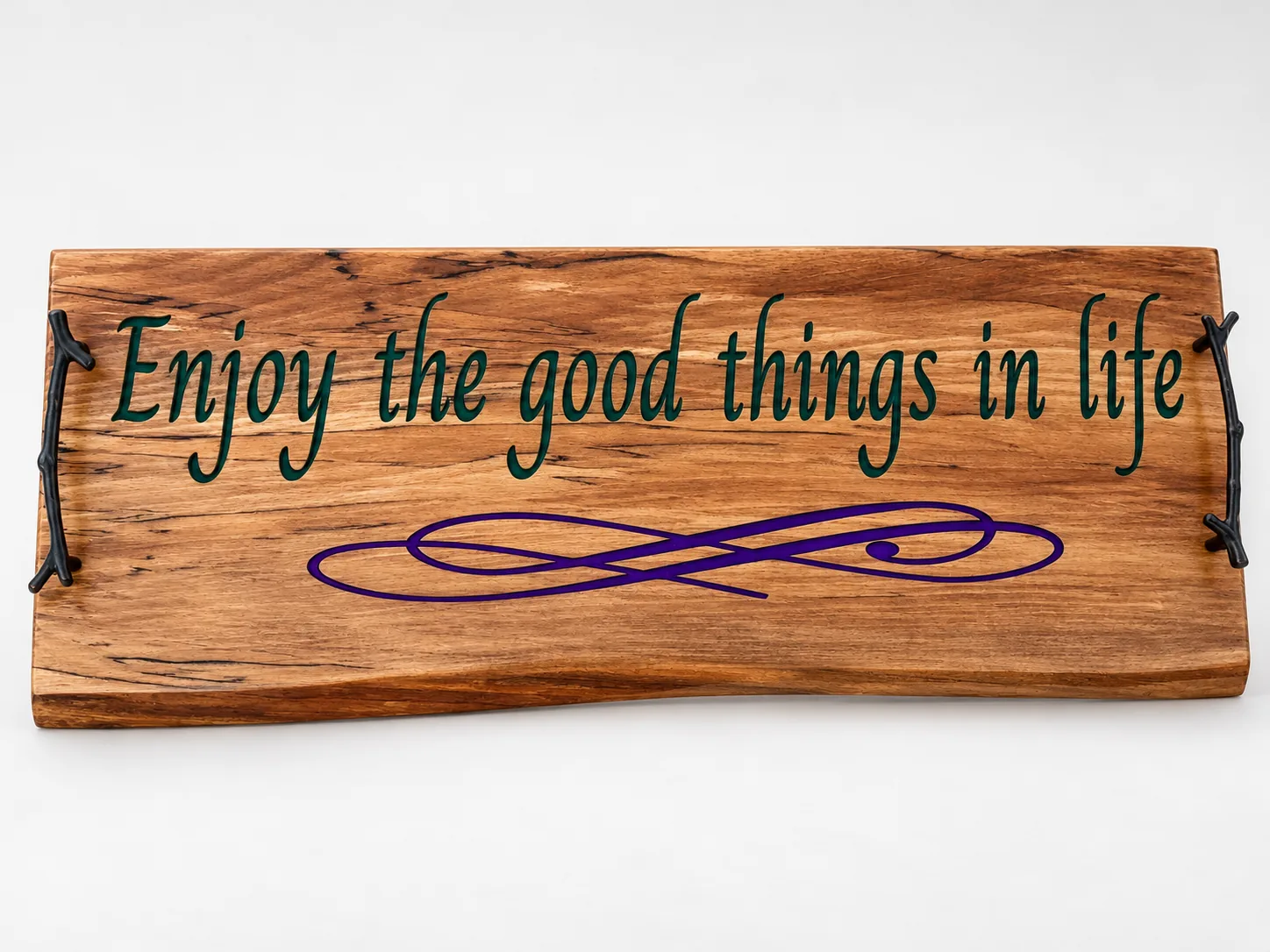
Handles & hardware
Cast twig handles in antique brass or black, birdcage handles, hanging rings and rubber feet, chosen to suit the board, never the other way round.
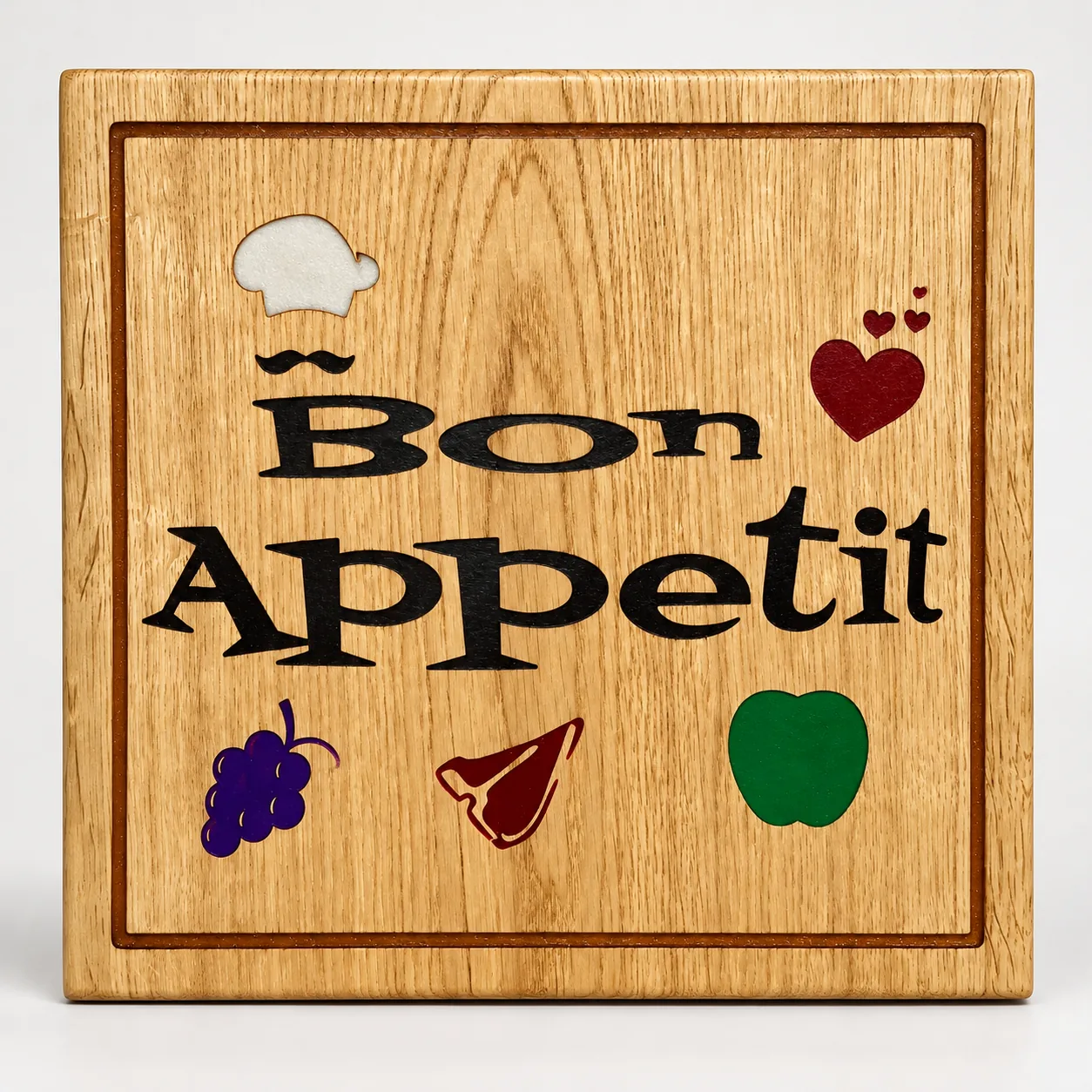
Food-safe finish
Two coats of hardwax oil, buffed back to a satin sheen. Safe for food from day one, and easy to top up at home.
Previous work
Some of what's left the bench
Every one of these is a real piece, photographed as it was finished. Some are still in the shop; the one-offs have gone to their kitchens.
Find your board
Ready-made pieces ship within days. Personalised and bespoke ones take a little longer, and are worth it.
Shop the boards